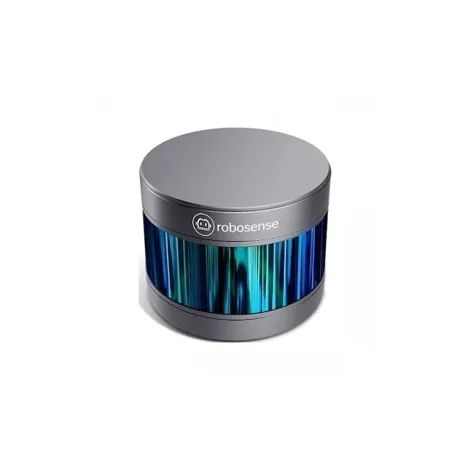
LiDAR (Light Detection and Ranging) sensors have emerged as one of the most transformative technologies in modern mapping and automation. By emitting rapid laser pulses and measuring the time it takes for them to reflect back from objects, LiDAR can generate highly accurate 3D models of environments. This capability allows industries to go beyond traditional imaging, offering precision down to the centimeter level, even in challenging conditions such as low light or dense vegetation. From autonomous vehicles to drones, LiDAR sensors are becoming essential tools for navigation, obstacle detection, and detailed terrain analysis.
What makes LiDAR particularly powerful is its versatility. In urban planning, it helps create digital twins of cities; in forestry and environmental monitoring, it uncovers hidden landscapes beneath thick canopies; and in archaeology, it reveals ancient structures without disturbing the ground. Combined with advancements in AI and data processing, LiDAR is shaping the future of automation, safety, and exploration. As costs continue to decrease and accessibility improves, LiDAR sensors are poised to move from specialized tools to mainstream technologies driving innovation across multiple industries.
How Lidar works
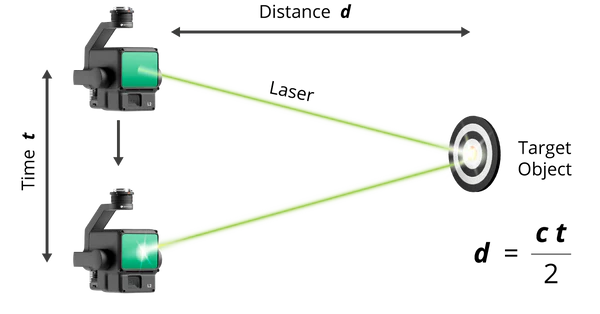
LiDAR (Light Detection and Ranging) is a game-changing technology that powers everything from self-driving cars to 3D mapping. But how does it actually work? Here’s a concise breakdown of the process:
Emitting Laser Pulses
A LiDAR sensor fires thousands of laser pulses per second into its surroundings.
Capturing Reflections
These pulses bounce off objects—like buildings, trees, or vehicles—and return to the sensor.
Measuring Distance
By calculating the time it takes for each pulse to return (using the speed of light), the sensor determines the precise distance to each object.
Creating 3D Maps
Combining these distance measurements with the sensor’s position and orientation, LiDAR generates a detailed 3D “point cloud” of the environment.
Processing Data
Specialized software turns the point cloud into real-time maps or models, enabling applications like navigation, surveying, or environmental analysis.
Why LiDAR Sensors Are Crucial for Modern Technology
LiDAR (Light Detection and Ranging) sensors have become a cornerstone of innovation across industries, from autonomous vehicles to environmental monitoring. By emitting laser pulses and measuring their reflections, LiDAR creates highly accurate 3D maps of the world, enabling technologies to “see” and interact with their surroundings in ways that were previously impossible. Here’s why LiDAR is so important:
1. Unmatched Precision in 3D Mapping
LiDAR’s ability to generate centimeter-level accurate 3D models sets it apart. By sending out thousands of laser pulses per second, it measures distances to objects with incredible precision. This is critical for applications like autonomous vehicles, where understanding the exact position of obstacles, pedestrians, or road features ensures safe navigation.
2. Reliable Performance in All Conditions
Unlike cameras, which depend on visible light and can falter in low-light, fog, or glare, LiDAR operates effectively in diverse conditions. Its laser-based system performs consistently day or night, in rain or shine, making it a dependable choice for mission-critical applications.
3. Real-Time Data for Autonomous Systems
In self-driving cars, drones, and robotics, LiDAR provides high-resolution, real-time data. This allows systems to detect obstacles, track moving objects, and make split-second decisions. For example, in autonomous vehicles, LiDAR helps create a dynamic “picture” of the environment, enabling safer and smoother navigation.
4. Versatile Applications Across Industries
LiDAR’s utility extends far beyond transportation. Its applications include:
- Urban Planning and Surveying: Creating precise topographic maps and city models for infrastructure development.
- Agriculture: Monitoring crop health, optimizing land use, and improving yield predictions.
- Archaeology: Uncovering hidden structures or landscapes without invasive digging.
- Environmental Monitoring: Measuring forest canopy density or tracking coastal erosion with high accuracy.
5. A Perfect Complement to Other Sensors
LiDAR shines when paired with other sensors like cameras and radar. While cameras capture color and texture, and radar excels in detecting objects at long distances, LiDAR adds depth and precise distance measurements. This fusion creates a comprehensive understanding of the environment, critical for complex systems like autonomous driving.
Why LiDAR Matters Now
As industries push toward greater automation and precision, LiDAR’s role continues to grow. Its ability to deliver reliable, high-resolution spatial data makes it indispensable for building safer, smarter, and more efficient technologies. Whether it’s guiding a self-driving car through a busy street or mapping ancient ruins, LiDAR is shaping the future of how we interact with the world.
Conclusion: The Pivotal Role of LiDAR in Shaping Tomorrow
LiDAR’s ability to deliver precise, real-time 3D spatial data makes it a cornerstone of modern and future technologies. From enabling safer autonomous vehicles and smarter cities to revolutionizing augmented reality, robotics, environmental monitoring, space exploration, and healthcare, LiDAR is driving innovation across diverse fields. As the technology becomes more compact, affordable, and AI-integrated, its impact will only grow, unlocking new possibilities for efficiency, safety, and sustainability. LiDAR isn’t just mapping the world it’s shaping the future.
